Originally written during the pandemic, updated for Beyond Limits Education to reflect timeless strategies for personal growth.
This article is part of the Growth and Balance Series, where I explore the intersection of personal well-being, resilience, and mindset. Through lessons drawn from injury recovery and life transitions, this piece offers insights on self-care practices and reflective exercises to help you build adaptability and inner balance.
Introduction
Ever feel like you’re spinning your wheels, ending each day feeling unaccomplished despite your best efforts? Many of us experience this, not just during global crises, but anytime life throws us unexpected challenges.
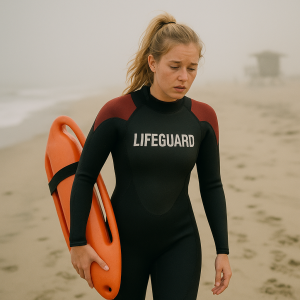
For me, one of the most defining moments came on October 3, 2010. I was working the Los Angeles Triathlon as an ocean lifeguard, stationed in my favorite spot, shore safety, where I could actively help competitors navigate the surf. Throughout the morning, I rescued numerous swimmers, guiding people of all skill levels through the unpredictable ocean. But near the end of the swim leg, Mother Nature served me a large slice of humble pie. A 200+ pound competitor was thrown by a wave and landed squarely on my head.
What followed was months of migraines, mental fog, overwhelming exhaustion, and cognitive challenges. At first, I stubbornly tried to power through. I kept trying to return to my intense pace of working, training, and helping others, only to repeatedly fail and sink deeper into frustration. Eventually, I hit a breaking point where I could no longer ignore my reality. It took years of recalibrating, seeking support, and learning how to take care of myself in a sustainable way before I felt truly functional again.
These hard-won lessons reshaped how I approach adversity, burnout, and life transitions. They are lessons I’ve drawn from in many moments since, most recently when navigating global uncertainty. In this article, I share those lessons along with practical reflection exercises you can use to examine your own well-being and resilience.
Whether you’re facing personal adversity, burnout, or simply feeling overwhelmed, I hope you find these tools helpful. Feel free to read through or skip to the reflection exercises, take what serves you, and leave the rest.
Lesson 1: Practice Being Kind to Yourself

High achievers tend to fixate on weaknesses and dismiss strengths. I was no different—hypercritical of myself, focused on outcomes, and dismissive of the learning process. It wasn’t until I accepted the slow pace of my TBI recovery that I truly understood the importance of celebrating small wins and practicing self-kindness.
✅ Reflection Exercise: List recent examples of how you’ve shown kindness to yourself. Where have you been too hard on yourself?
Lesson 2: There Are No Quick Fixes

In recovery, I desperately wanted instant results. Like many, I consumed endless self-help resources searching for the magic solution. The truth? Sustainable change takes time. Working with therapists taught me that what works for others might not work for me, and that’s okay.
✅ Reflection Exercise: Which self-help tools have you tried? Which took longer to work on or required more experimentation?
Lesson 3: What Worked Before Might Not Work Now
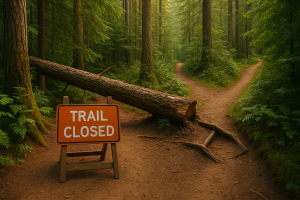
My old systems, rigid schedules, and lofty goals failed me during recovery. I realized the methods that helped me succeed as a student-athlete weren’t suitable for healing and adapting to life’s evolving demands. Growth meant re-evaluating and adjusting long-held habits.
✅ Reflection Exercise: What past strategies feel outdated or unhelpful? What changes could better serve your current needs?
Lesson 4: Experiment and Adapt
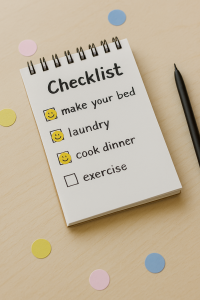
Through trial and error, I rebuilt healthier habits: smaller goals, flexible routines, realistic expectations, and daily reflection. Even using simple smiley stickers to track progress boosted my mindset. Sustainable self-care requires consistent recalibration, not rigid adherence to old methods.
✅ Reflection Exercise: What’s one new small habit you could experiment with this week to improve your well-being?
Lesson 5: Helping Everyone Helps No One—Especially Yourself
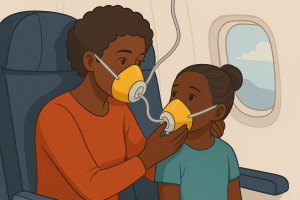
As a caregiver by nature, my instinct was to help everyone. But spreading myself too thin led to burnout. True impact comes from focused, sustainable giving, rooted in maintaining my own well-being first.
✅ Reflection Exercise: List your top 3 priorities. Are you taking care of yourself enough to sustain those priorities effectively?
Final Reflection
Adversity—whether from injury, life transitions, or broader challenges—offers valuable lessons if we’re willing to pay attention. As author Dan Millman reminds us:
“Our teachers appear in many forms… Moment to moment, our teachers reveal all we need to know. The question is, are we paying attention?”
The world is full of teachers if we stay open to learning.
In the Bonus Feature: Beyond Toughing It Out of the Growth and Balance Series, I had the chance to talk about these lessons in a more personal, conversational way on the Female Guides Requested podcast. We dive into pivotal career shifts, overcoming setbacks, and what it really means to move forward with resilience.
Author: Brigitte Denton (Founder of Beyond Limits Education)
Acknowledgement: This article was reviewed and refined with the assistance of OpenAI’s GPT-4, complementing the human editorial process. Header and supporting images were generated using AI tools (OpenAI image generation) and customized for use by Beyond Limits Education.